Stack IAD 313
Summarize the project's program, features and achievements?
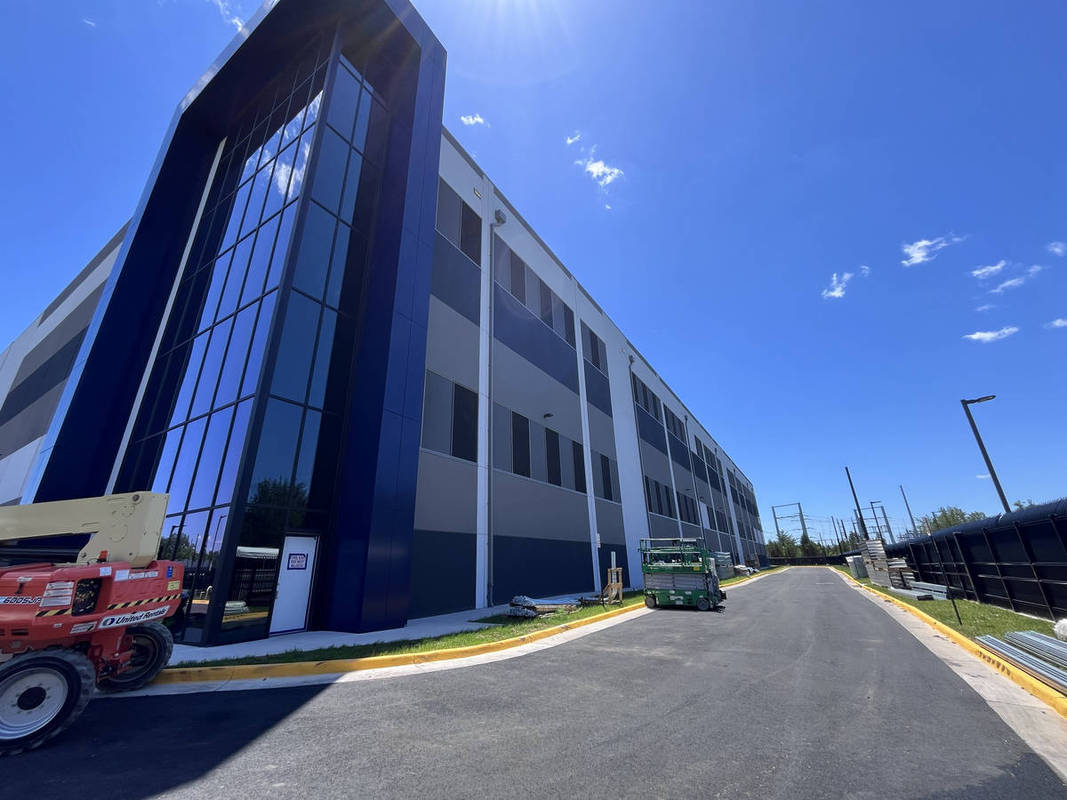
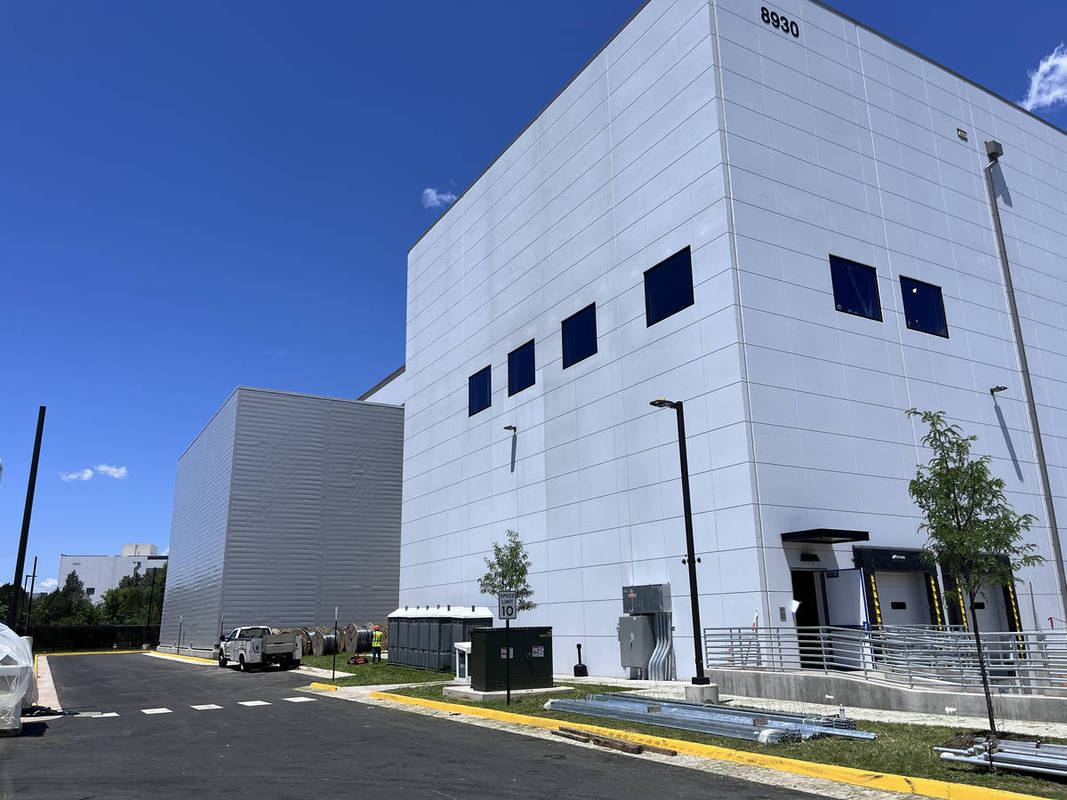
IAD 313 is a 92,000 SF data center located in Manassas, Virginia, constructed under a highly compressed fast -track schedule within an extremely active jobsite environment. From the outset, the project team recognized that a traditional data center construction sequence would not achieve the required tilt-up panel erection milestones. To meet the accelerated schedule, Century Concrete implemented a non-traditional sequencing strategy that allowed panel erection activities to begin earlier than typical projects, enabling critical milestones such as structural steel erection and elevator installation to proceed sooner while also providing additional time for underground utility coordination.
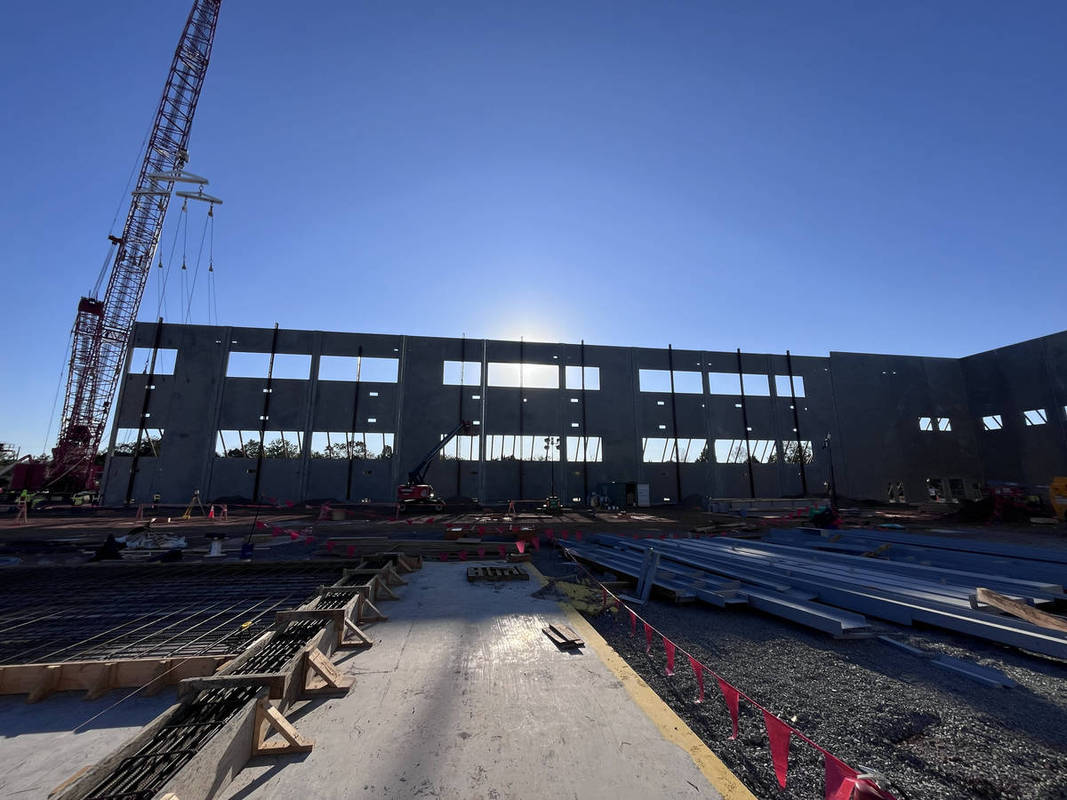
Rather than waiting for foundations and slab-on-grade construction to be completed before beginning panel casting operations, the project utilized temporary casting slabs installed both within the building footprint and around the perimeter of the structure. Approximately six temporary casting slab areas were continuously reused throughout panel production. Panels were formed, reinforced, cast, and erected from these temporary areas while underground utilities, interior foundations, and other site work progressed simultaneously. Once panel erection was complete, the temporary casting slabs were demolished and recycled to allow subsequent construction activities to continue. This innovative sequencing approach significantly reduced schedule impacts and maintained continuous panel production despite ongoing site constraints.
The accelerated schedule required nearly every phase of construction to overlap with another. Steel erection, underground utility installation, slab preparation, panel erection, MEP installation, and concrete placement all occurred concurrently within limited and constantly shifting work zones. Laydown areas and site access frequently changed as work progressed and additional subcontractors mobilized within the constrained site footprint.
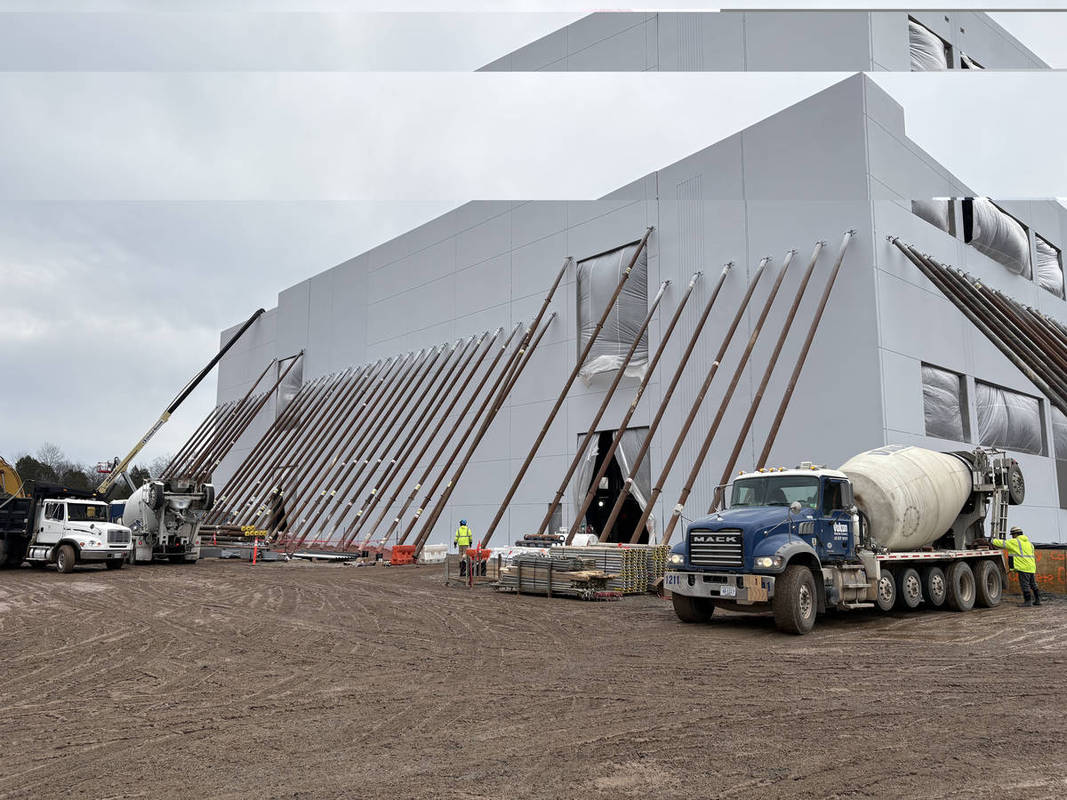
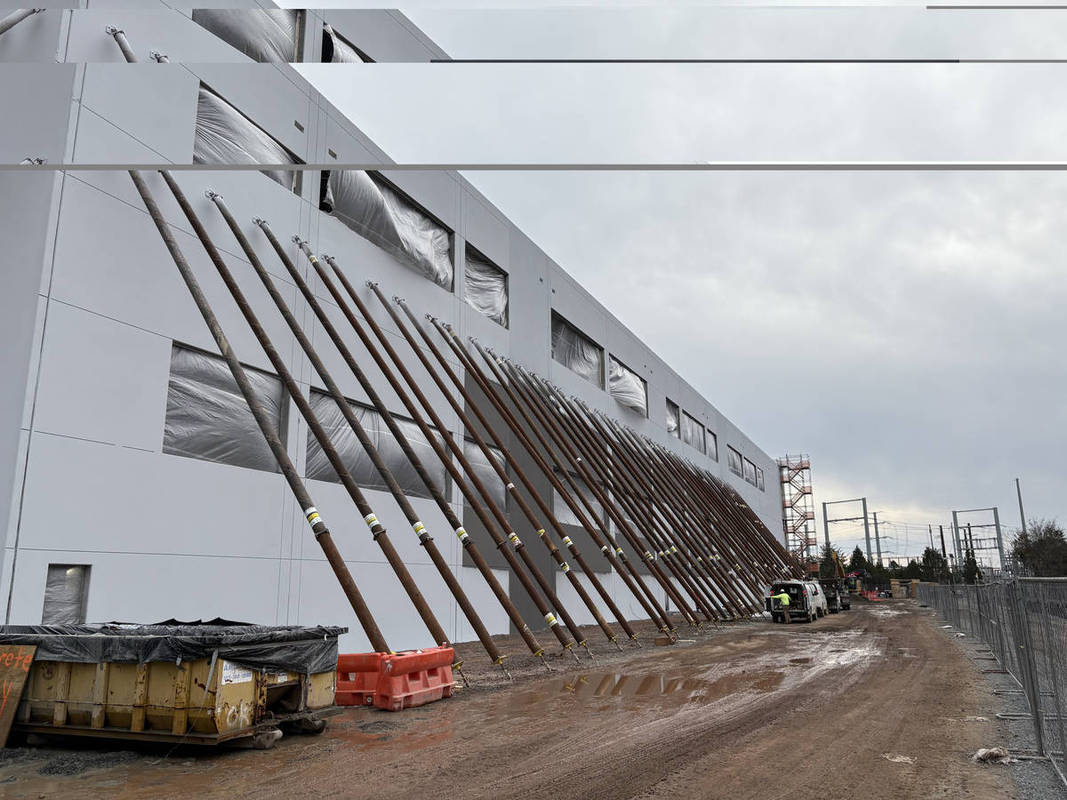
Additional coordination challenges arose from phased helical ground anchor (HGA) installations, which often had to occur immediately ahead of panel erection activities rather than in advance as on a typical tilt -up project. Maintaining crane access while coordinating brace layouts, deliveries, steel erection, and ongoing site operations further complicated logistics.
The project team also overcame significant material and weather-related challenges. Winter conditions impacted large slab-on-grade placements, requiring extended curing and finishing operations. Regional concrete plant shutdowns and supply delays periodically affected concrete deliveries during critical placement operations, while specialty tilt-up materials required close coordination to avoid production interruptions. The team continuously adjusted sequencing, manpower, and work plans to maintain progress.
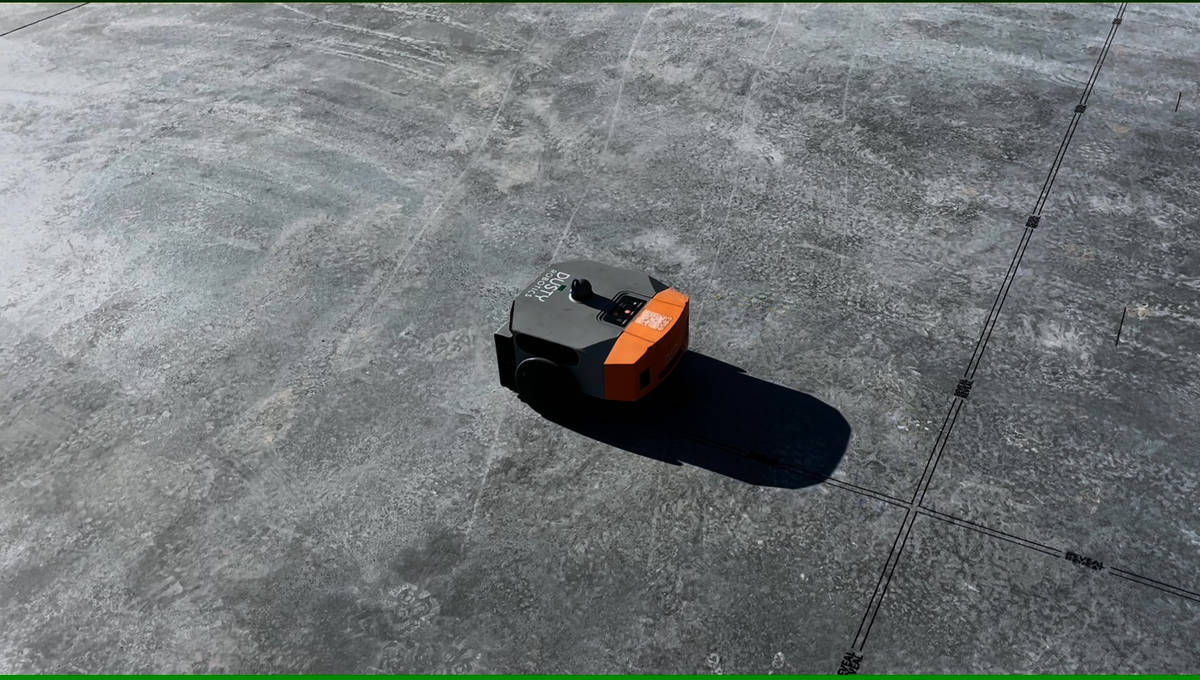
Technology also played an important role in project success. Century Concrete deployed the Dusty Robotics layout robot for all panel layout operations on casting beds, substantially improving layout speed and accuracy while accelerating formwork activities.
Another unique challenge involved maintaining uninterrupted public access to an active substation located within the project limits. Continuous coordination between trades, deliveries, crane operations, and concrete activities allowed safe public access to remain operational throughout construction.
Through constant communication, flexibility, and rapid problem-solving between all trades, the project team successfully delivered a highly complex tilt-up data center while maintaining safety, productivity, and critical project milestones within an accelerated schedule.
What obstacles were overcome related to the schedule, budget, program, specification, site, etc. on this project?
One of the primary challenges on IAD 313 was maintaining critical erection milestones while multiple subcontractors worked simultaneously within a constrained site footprint. Continuous coordination was required between Century Concrete, steel erectors, MEP trades, and site contractors to manage overlapping operations and shifting work zones.
To improve efficiency, the team implemented the Dusty Robotics layout robot for all panel layout operations on the casting beds. This technology significantly increased layout speed and accuracy, allowing formwork activities to begin sooner and helping maintain the accelerated schedule.
Site logistics remained a constant challenge throughout the project. Laydown areas frequently shifted as work progressed, while deliveries of concrete, reinforcing steel, aggregate, and equipment had to be carefully coordinated due to limited site access and ongoing construction traffic. Underground utility revisions also created schedule pressure, often requiring previously completed slab-on-grade preparation areas to be removed and reworked. The team regularly compressed several days of preparation work into shorter durations to maintain placement schedules.
Additional complexity resulted from the need to maintain public access to an active substation located within the project limits while crane operations, concrete placements, deliveries, and multiple trades remained active onsite. Winter weather conditions, concrete supply delays, and restricted crane road and brace layouts further complicated operations.
Despite these challenges, the project team maintained progress through continuous communication, rapid problem - solving, flexible sequencing, and close coordination between all trades, ultimately achieving major project milestones within the compressed schedule.
Please communicate any engineering complexities or unique features of the panel design for this project?
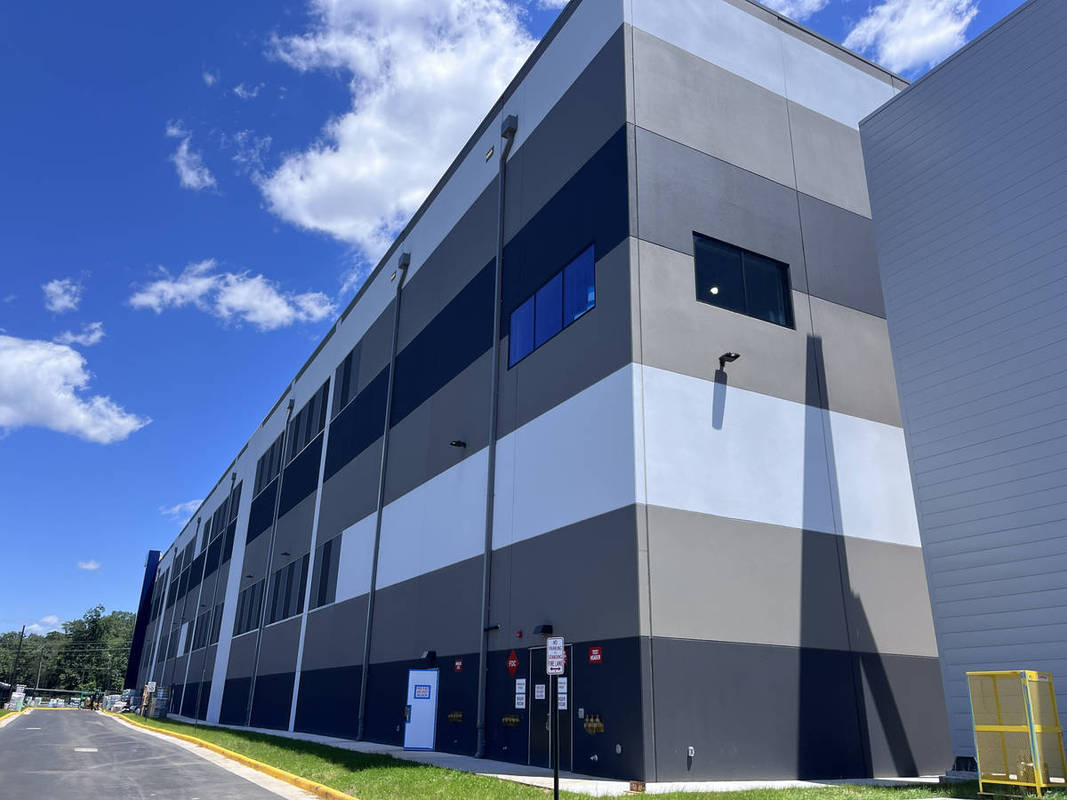
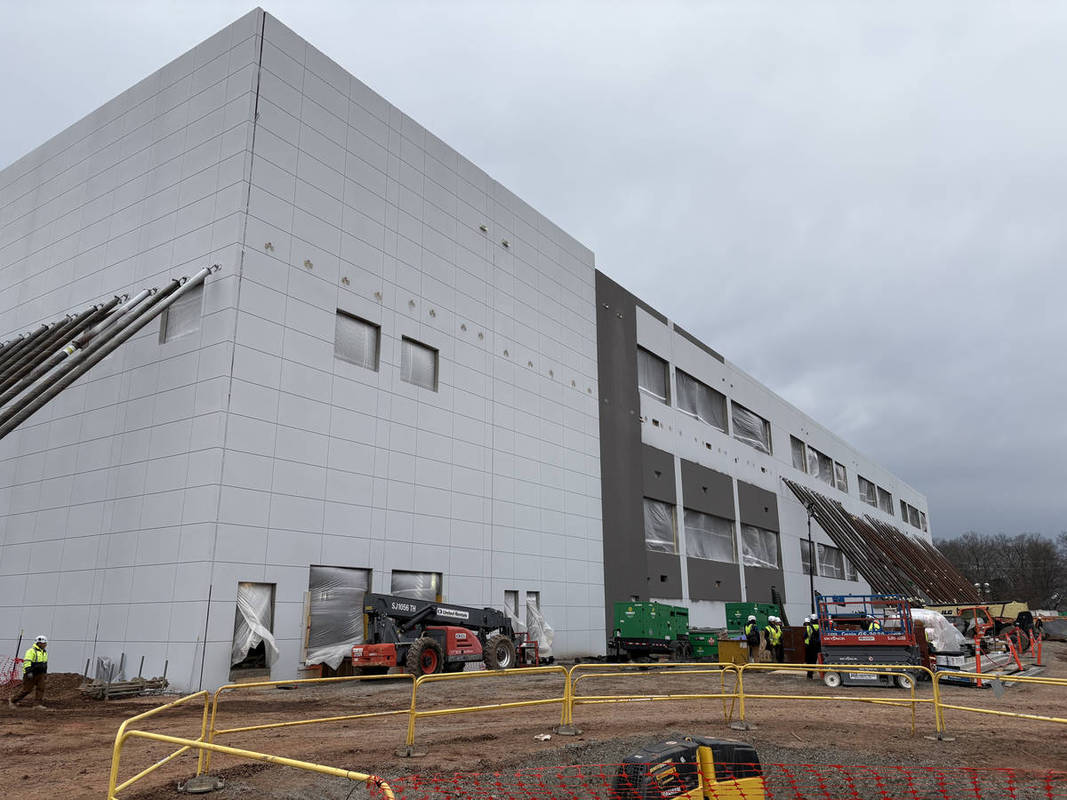
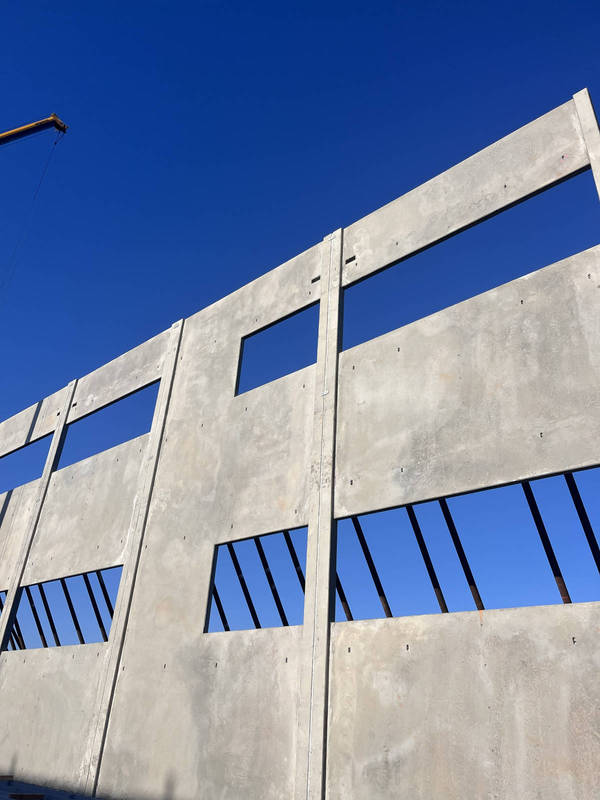
IAD 313 incorporated multiple panel features and architectural elements including reveal, form liners and pilasters that increased the complexity of the tilt-up operations. The panels included numerous louver openings, scuppers, windows, door openings, and overhead door openings that required tight forming tolerances and extensive coordination during fabrication.
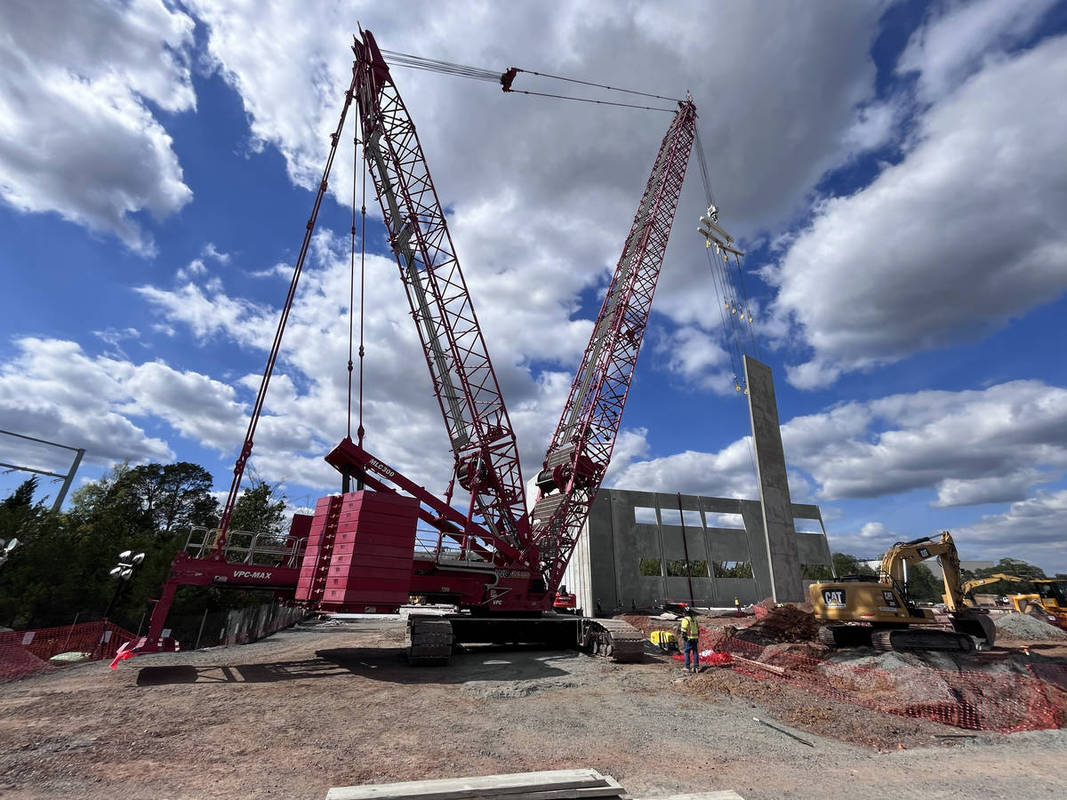
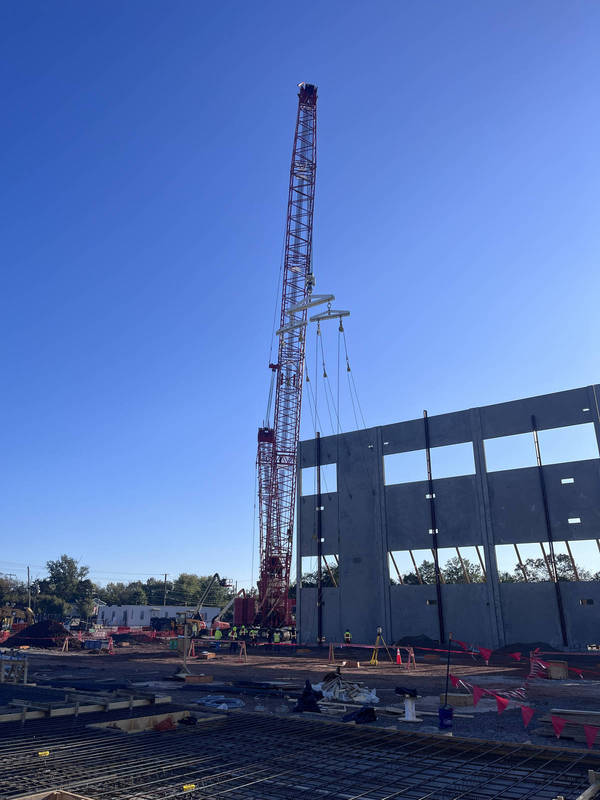
One of the most unique aspects of the project was the panel erection activity proceeding all other site activities. Unlike a traditional tilt-up project where panels are often cast directly on future slab-on-grade areas, all panels on IAD 313 were cast on temporary casting slabs on the interior of the building and surrounding the building footprint. This sequencing approach required careful planning of crane access, brace locations, panel erection order, and demolition activities for the temporary casting slabs.
The project site also presented significant bracing and crane coordination challenges. Due to the limited crane road width and highly active work areas, brace layouts had to be strategically coordinated to avoid interfering with crane movement, steel erection operations, and ongoing subcontractor activities. Helical anchor systems were utilized throughout the project to maintain panel stability while preserving access routes across the site.
The project sequencing further increased engineering complexity because major interior construction activities continued while panel erection operations were ongoing. Foundations, steel erection, MEP and slab preparation frequently occurred concurrently within active tilt-up work zones. Maintaining safe operations and proper sequencing required extensive coordination between all project teams.
Project Location
MANASSAS, VA 20109
United States
Project Images
1
2
3
4
5
6
7
8
9
10
11
Project Team (TCA Members)
- Developer/Owner:
- General Contractor:
- Concrete Contractor:
- Century Concrete Inc
- Architect:
- Engineer:
- Leviat
- Suppliers:
- Leviat
- Photographer(s):
Project Specifics
- Project Category:
- Technology
- Building Types:
- Data Center
- Finishes:
- Paint (Textured)
- Features:
- Formliner
- Reveals
- Insulation:
- Post Applied (Interior)
- Environmental:
- Number of Floors:
- 2
- Number of Panels:
- 52 panels
- Tilt-Up Wall Area:
- 91,582 sq ft (8,508 sq m)
- Total Floor Area:
- 177,700 sq ft (16,508 sq m)
- Project Footprint:
- 92,015 sq ft (8,548 sq m)
- Tallest Panel:
- 76 ft 0 in (23.16 m)
- Widest Panel:
- 33 ft 0 in (10.06 m)
- Largest Panel:
- 2,300 sq ft (213.7 sq m)
- Heaviest Panel:
- 265,590 lbs (120,470 kg)
Tilt-Up Concrete Association (TCA)
PO Box 204
402 1st Avenue SE
Mount Vernon, IA 52314
United States
Connect with Us!


About the Tilt-Up Concrete Association
Founded in 1986, the Tilt-Up Concrete Association (TCA) strives to improve the quality and acceptance of site-cast Tilt-Up construction - one of the fastest growing industries in the United States, combining the advantages of reasonable cost with low maintenance, durability, speed of construction and minimal capital investment. Over 10,000 buildings, enclosing more than 650 million square feet, are constructed each year using this construction method.
Site resources: Accessibility
All content copyright 2026 - Tilt-Up Concrete Association, unless noted otherwise.
Homepage slider image credits: (1) Ryan Goubty | Gensler, (2) Simon Menges | David Chipperfield Architects, (3) Bill Timmerman | richärd+bauer, (4) David Lauer | Semple Brown, (5) Matthew McFarland | Forum Studio.